
May was an eventful month for India. The worlds largest democracy said hello to a new Prime Minister and the Gandhi family took a major hit in years, Arvind Kejriwal was arrested and the Aam Aadmi Party (of which Time once featured an article in which the party was identified as India’s next big political revolution) is now falling apart.
In fact, the chaiwallah from Gujarat brought with him the revolution.
And then the Sri Lankan President met Mr. Narendra Modi. A lengthy discussion followed.
Among the hot topics of the discussion were the post-war reconciliation process of Sri Lanka, the border violation issues of fishermen, and of course the SAARC.
To those of us in South Asia, SAARC has become a forgotten topic ever since the 17th Summit in Maldives four years back. This November, Kathmandu will host the next summit.
So why is SAARC forgotten?
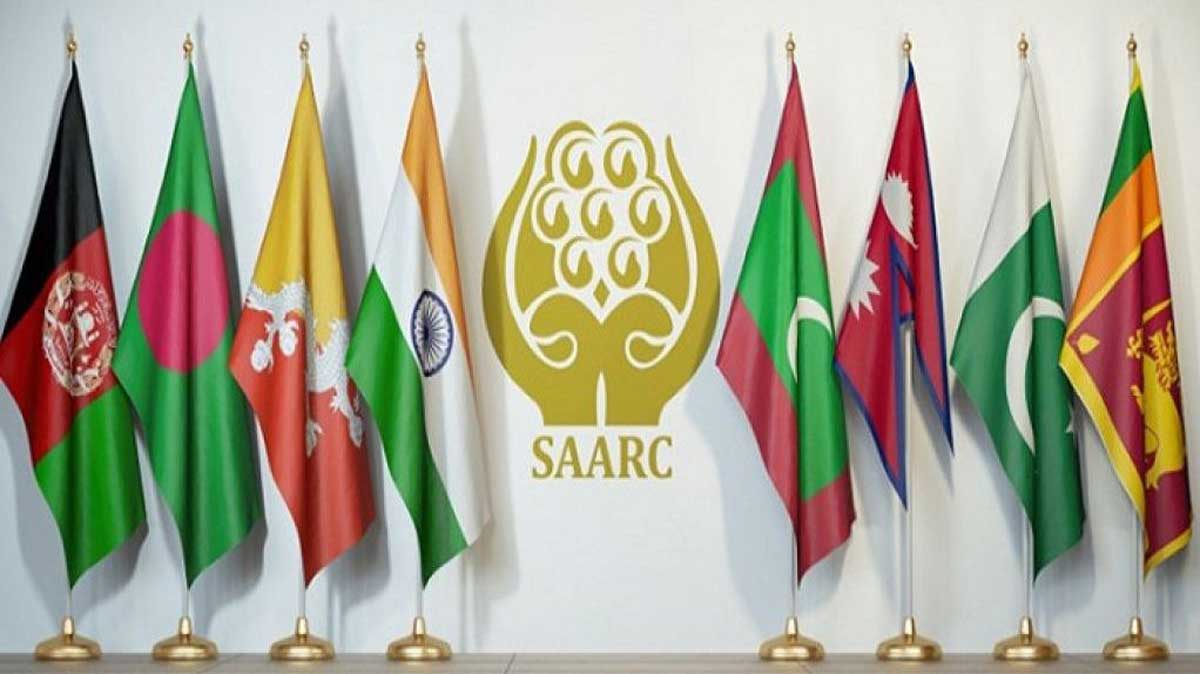
This never really got my attention until recently when the Ambassador of the European Union to Sri Lanka HE David Daly was invited to a lecture at the Bandaranaike International Diplomatic Training Institute. The Ambassador’s focus was on the role of the European Union in world affairs, the interactions among its members and the relevant technicalities. While sitting through the lecture, my mind slowly wandered off and stopped near the memory of this remotely familiar logo which was meant to depict collectivism: the logo of South Asian Association for Regional Co-operation.
Type in saarc-sec.org and you will be directed to a poorly designed, poorly updated website which is the online home for SAARC. While it may spell out prejudice to measure an institution’s performance by the level of it’s web activity, it has nonetheless become a crucial determinant for assessing efficiency in this digital age. While my views are by no means based on this fact, it is quite in the open that much of SAARC’s other actions are also neglected as their website.
I do not intend to glorify the European Union (in fact an avidly hated institution among conservative Asians) or to suggest that we follow the European techniques to rise to power as a regional alliance. What I mean to say is that from the look of things, the European Union has grown to be an institution which exercises considerable influence over its member countries. Their take on economic, political and social issues that affect Europe, and most importantly, the ‘hands-on’ approach taken in tackling those has been phenomenal. They have had their share of nightmares, but what fascinates me is the collectivism and collective strength exercised by the 28 countries which make up slightly more than one tenth of the world’s population. The institution has been challenged by residents within its own boundaries, such as the National Front of France led by Marine Le Pen, but my friend Lloyd Russel-Moyle, the Vice President of the European Youth Forum, tells me that a full-fledged Anti-EU movement is far from being materialised.
One might argue that the South Asian countries find it hard to afford frequent open forums where the authorities can effectively get together and find common ground in addressing regional issues. I disagree. Hosting “conferences” with sophisticated, futuristic names is not the only way of getting people together.
After all, the ‘Asian Century’ should live up to its namesake, and the Southerners can undoubtedly be a major force in doing so.
Leave a Reply