I walked out of the cinema last Saturday having seen my 100th film for the year. Not the 100th at the cinema, the 100th overall. Being a diligent Letterboxd logger, I could tell you exactly where I’ve seen them. These are the stats:
-
60 at the cinema
- 50 at QFT
- 9 at Cineworld Belfast (2 in IMAX)
- 1 at Movie House CitySide Belfast
-
40 at home
- 27 on streaming
- 7 on 4K Blu-ray
- 6 on Blu-ray
So there it is. Had this been a competition, QFT would have won by a considerable margin. This would in no way come as a surprise to those who know me. I practically spend all my free time there. QFT is unique; there is no place like it.
I am grateful to be able to live in a place where I have access to a wide variety of films—including small independent features from around the world—through cinemas like QFT. Had I been living back home in Sri Lanka, my film consumption would have been limited to a few international blockbusters distributed in local theatres and the occasional gem—rarely new—recommended by a friend to be seen at home, generally acquired through nautical means.
New favourites
We’re only halfway through the year, and it’s far too early to pick my favourites of 2026, but I wanted to share a few that have made a real impression on me. Out of the first 100 films I’ve seen this year, the following—all released in 2026 (based on UK&I release schedules)—stood out to me.
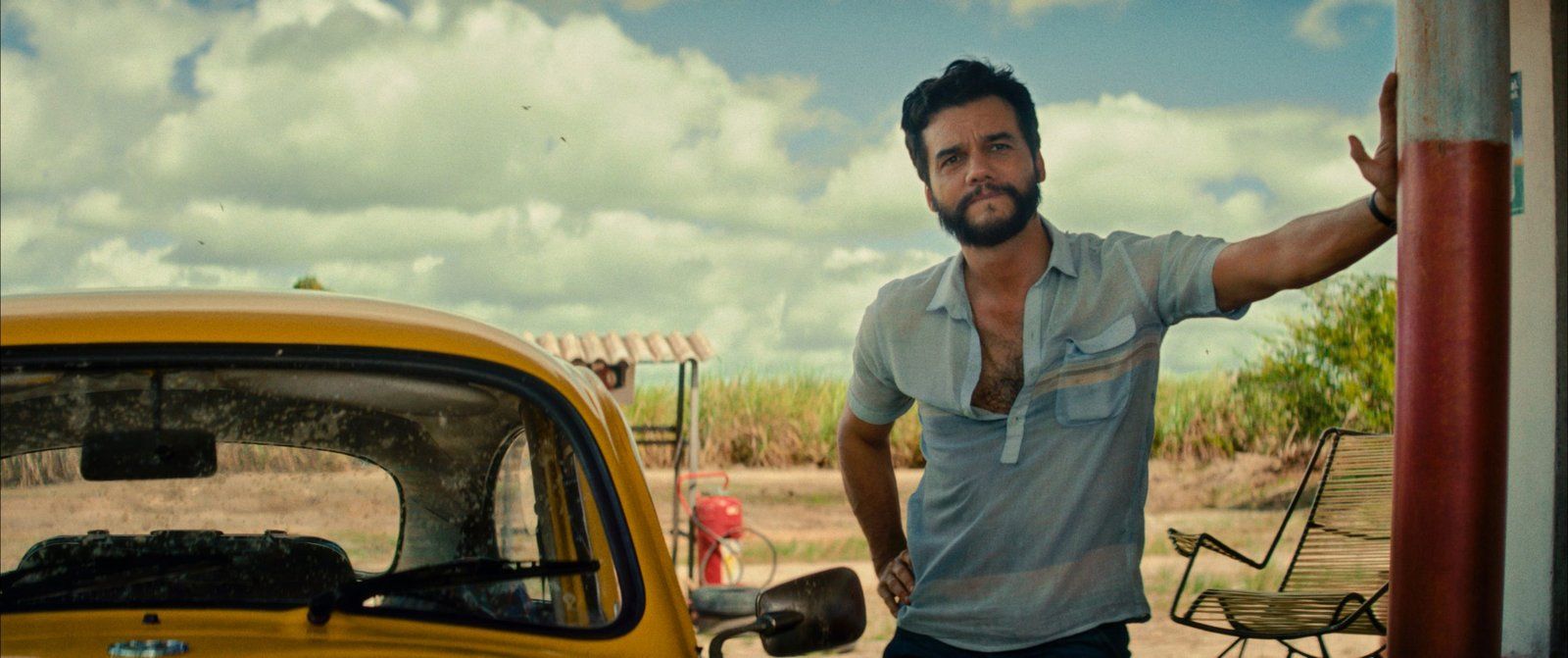
The Secret Agent and The Blue Trail
I have already waxed poetic about why these have become firm favourites of mine, so I will not repeat myself. It certainly seems to be an exciting time for Brazilian cinema; long may it continue.
The Secret Agent | The Blue Trail
My Father’s Shadow, The History of Sound, H is for Hawk, and Romería
These are all very different films, but I find that an interesting thread connects them all: they deal with the passage of time and how that shapes memory. There is a wistful quality to these films, and a sense of unbearable longing. I tried to put this into words a while ago, but they must be seen with your own eyes to be fully appreciated.
Watching My Father’s Shadow also prompted me to see Akinola Davis Jr.’s short film Lizard. You can see a young filmmaker with a unique voice fully coming into his own through the arc of these two films. I’m excited to see what he makes next.
Romería reminded me of Charlotte Wells’ Aftersun, my favourite film of 2022. I must admit, I may be seeing Aftersun’s DNA everywhere because it is a film I adore, but some of the parallels are too obvious to ignore, in a spiritual successor sort of way. H is for Hawk did for me perfectly what Hamnet failed to do last year: sentimentality.
My Father’s Shadow | The History of Sound | H is for Hawk | Romería
DJ Ahmet
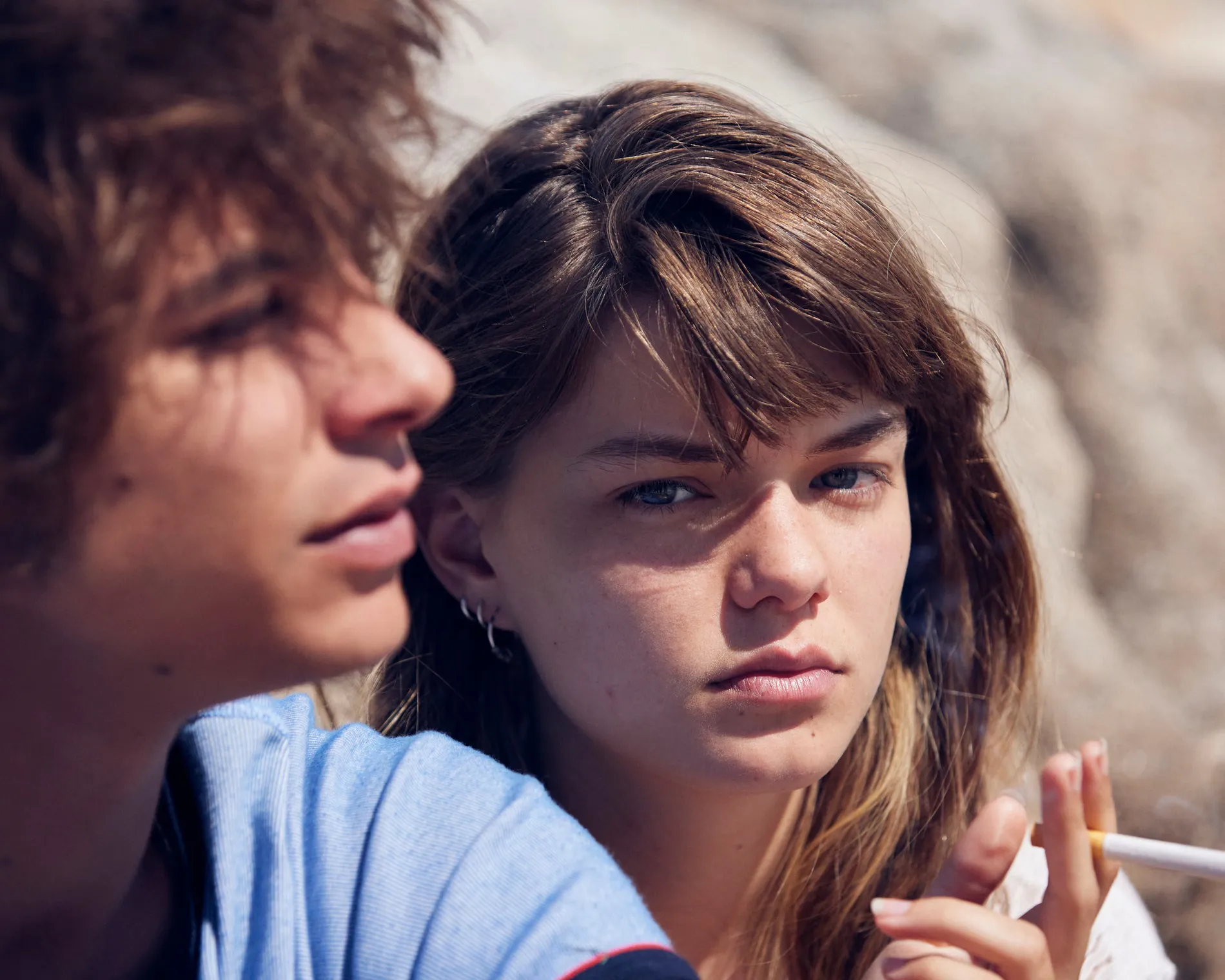
Set in a small village in North Macedonia, this is a coming-of-age drama that introduced me to a culture completely different to mine, yet strangely familiar in some ways, especially in its treatment of women and young girls. It’s a story of love; the love of a young boy for a young girl that he has to prove by letting her go, of brotherly love, and the love of an emotionally stilted father who has to remind himself of the fact. I must reiterate this: this film never would have reached Sri Lankan shores, neither through traditional distribution channels nor via those who sail the high seas. Even in Northern Ireland, the theatre run was limited, and I am glad to have caught it when it came.
Nouvelle Vague
On the lighter side, I thought Richard Linklater’s Nouvelle Vague perfectly captured the joy of creating at the dawn of the French New Wave, told through the story of Jean-Luc Godard making his debut feature, À bout de souffle. It was delightful enough to trick me into thinking that I could, and should, make a film myself. I suspect it would have made, and will continue to make, French cinema accessible to a wider audience, and that is always a good thing.
The Christophers
Steven Soderbergh must be the hardest-working man in Hollywood. His output has been prolific to say the least; his versatility as a filmmaker being proven over and over again with each new release. I wasn’t a fan of last year’s Presence (and I never saw Black Bag), but I see it as a minor work, a blip, in an illustrious career that has brought us many unforgettable cinematic experiences.
In The Christophers, Ian McKellen plays a washed-up painter in the eve of his life and legacy, cantankerous and eccentric, holed up in a London flat. He is a joy to watch (not to take anything away from the excellent Michaela Coel, who holds her own next to a veritable legend) and I cannot imagine anyone else in this role. It is such an English film for an American director to have taken on, but we all know that Soderbergh is not one to shy away from a challenge.
Rose of Nevada
Mark Jenkin is a filmmaker with a singular vision. He shoots all his material in 16mm film with a Bolex camera. No dialogue is recorded on set (the camera runs very loud); it is all recorded and synced in post. He scores the films himself and edits them. Oh, and they’re all shot in Cornwall.
While I appreciated the artistry of his previous film Enys Men, I found it hard to follow. Rose of Nevada was a far more “accessible” film and, I suspect, will be commercially successful for that reason. Yet it is still so wonderfully Jenkin. Tense, ethereal, and hauntingly strange. He truly loves the medium and it shows.
Honourable mentions
Apart from the films listed above, I also enjoyed The Drama, an uncomfortable “comedy” about an engaged couple whose wedding plans go off the rails after a secret is revealed. TRAD was a charming Irish film with music at its heart, and The Stranger brought Albert Camus’ novel to life with great flair.
Rewatches and classics
Of course, not all the films I saw this year were new releases. I rewatched some old favourites, including Napoleon Dynamite, There Will Be Blood, Stand by Me, Master and Commander: The Far Side of the World, and Labyrinth. I am aware that I’m quite late to the party, but this year was also when I finally got around to watching much-loved classics such as Amélie, Sorcerer, A Few Good Men, and Portrait of a Lady on Fire.
Bring on the next 100
It has been a strong start to 2026. Looking back through my Letterboxd diary today, I am reminded of the same optimism I felt about 2025. Film, as a medium, is not dead, as some would like to claim. There are remarkable filmmakers, old and new, around the world making great works of art and entertainment, facing increasing odds in a world that favours commoditisation. There is no lack of talent or willingness to take risks, but the risk-takers don’t get the distribution deals they deserve. This is not a new problem, but it becomes apparent the more you expose yourself to artists beyond the American hegemony over cinematic media.
I’m off to watch another film at QFT this evening. A classic this time, Spielberg’s A.I. Artificial Intelligence. I’ve seen it many times, but never on the big screen. I know it’s going to be a tearjerker, but I couldn’t be happier that I’m going to see it today. Film is magical.
For more fleeting thoughts and pithy one-liners on films, follow me on Letterboxd. Or you can see my latest watches on the /Now page.
If something in this post resonated with you, please leave a comment below. You can also respond via email or webmention.
Reference this post: When referencing this post, I prefer to be called Thamara, Thamara Kandabada, or Thamara's Notebook. URL:


.gif "Made with HTML")


